



Case Study
Building A High-Performance Hybrid Fintech Architecture
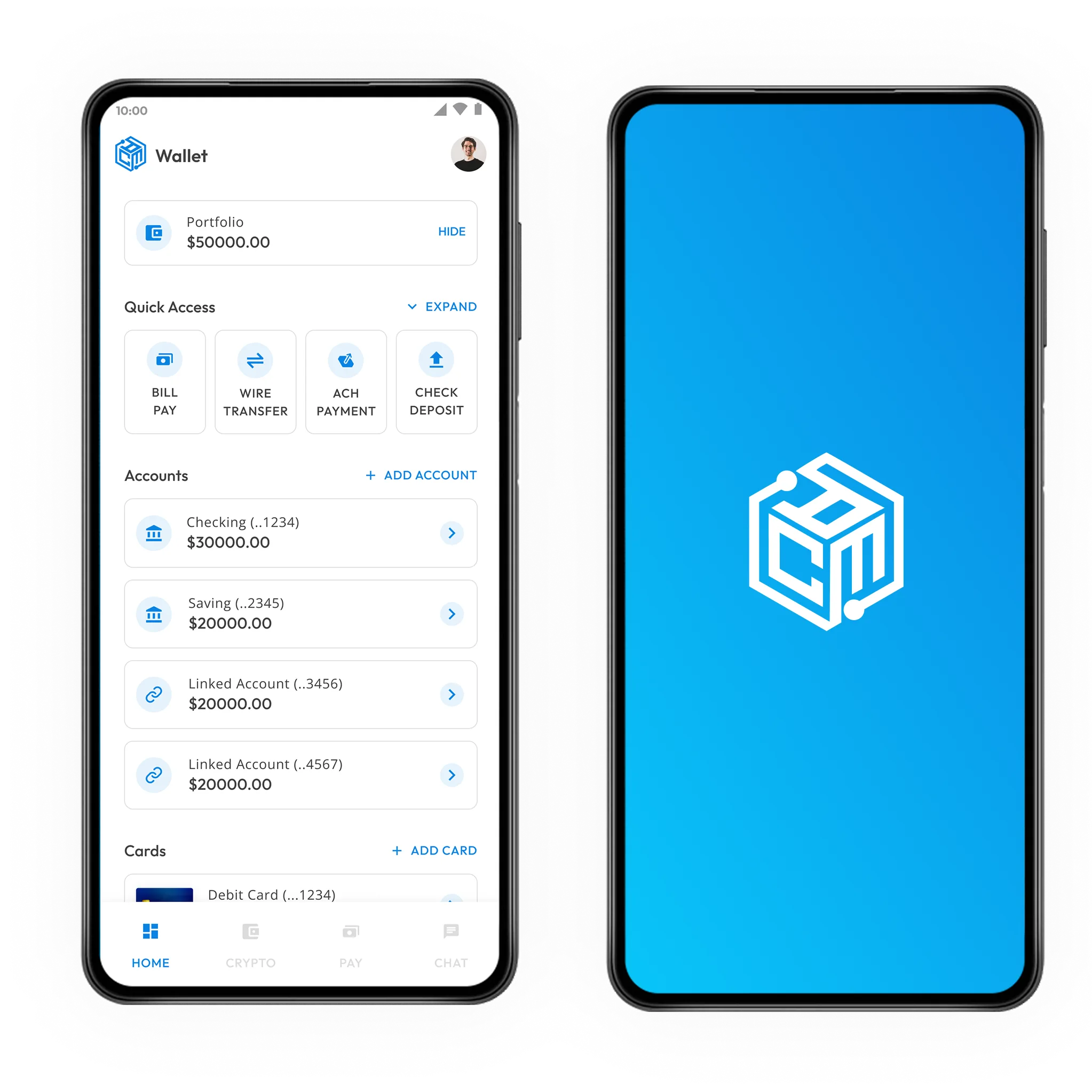
Discover how Acme Software utilized Golang, Flutter, and MongoDB to build "Wallet" a white-label fintech solution processing 10k requests/sec with zero downtime.
Key Result
Achieved 10,000 concurrent requests/sec and reduced white-label deployment time from months to weeks.
Industry
Tech Stack

Bridging the Fiat Crypto Divide: How Acme Software Engineered a High Scale Fintech Engine
The modern financial landscape is divided: legacy banking ensures stability, while decentralized finance (DeFi) offers agility. For enterprise applications, the challenge lies in bridging this "Integration Gap" without incurring massive technical debt or security risks. Acme Software developed Wallet, a proprietary fintech framework designed to orchestrate disconnected microservices into a seamless user experience. By leveraging a high-performance stack, Acme created a modular ecosystem capable of handling atomic settlements and borderless liquidity with enterprise-grade security.
The Challenge: The "Integration Gap" and Super-App Bloat
Building a modern neobank requires orchestrating a constellation of third-party services—Identity (Auth0), KYC (Sumsub), Banking (Unit), Payments (Stripe), and Crypto (Tatum). Historically, developers faced two critical roadblocks:
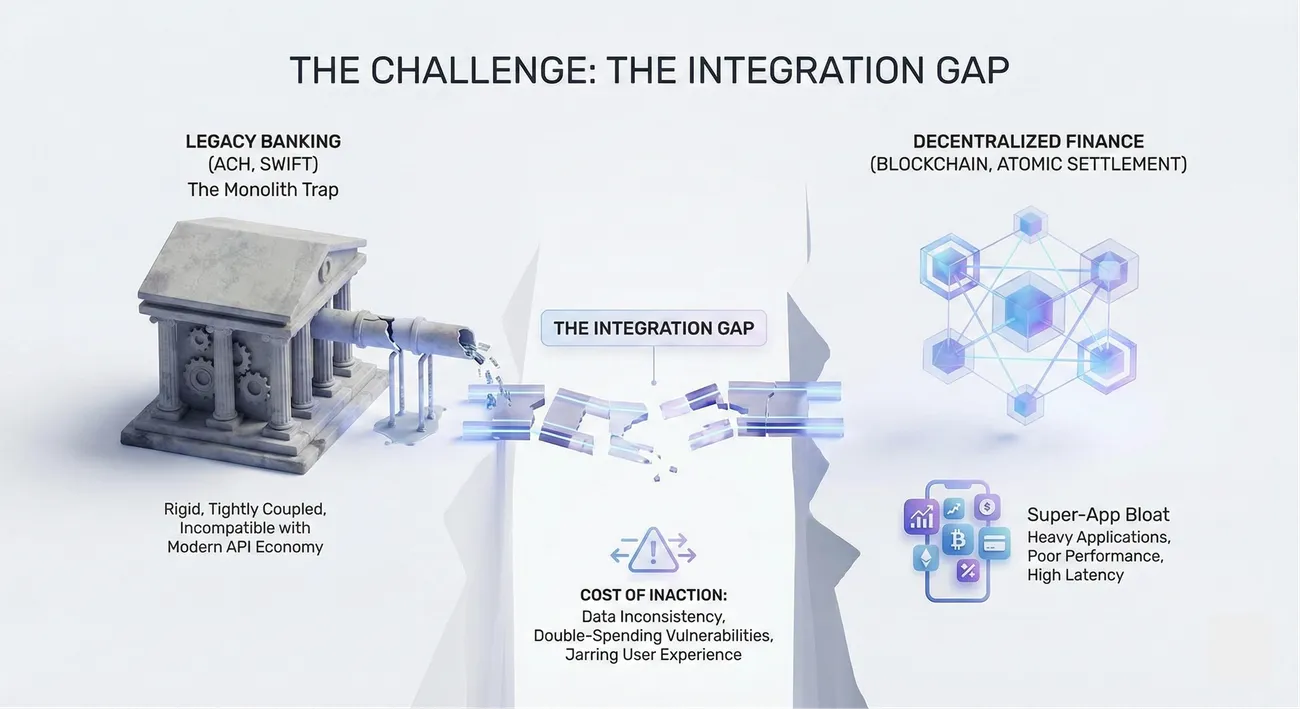
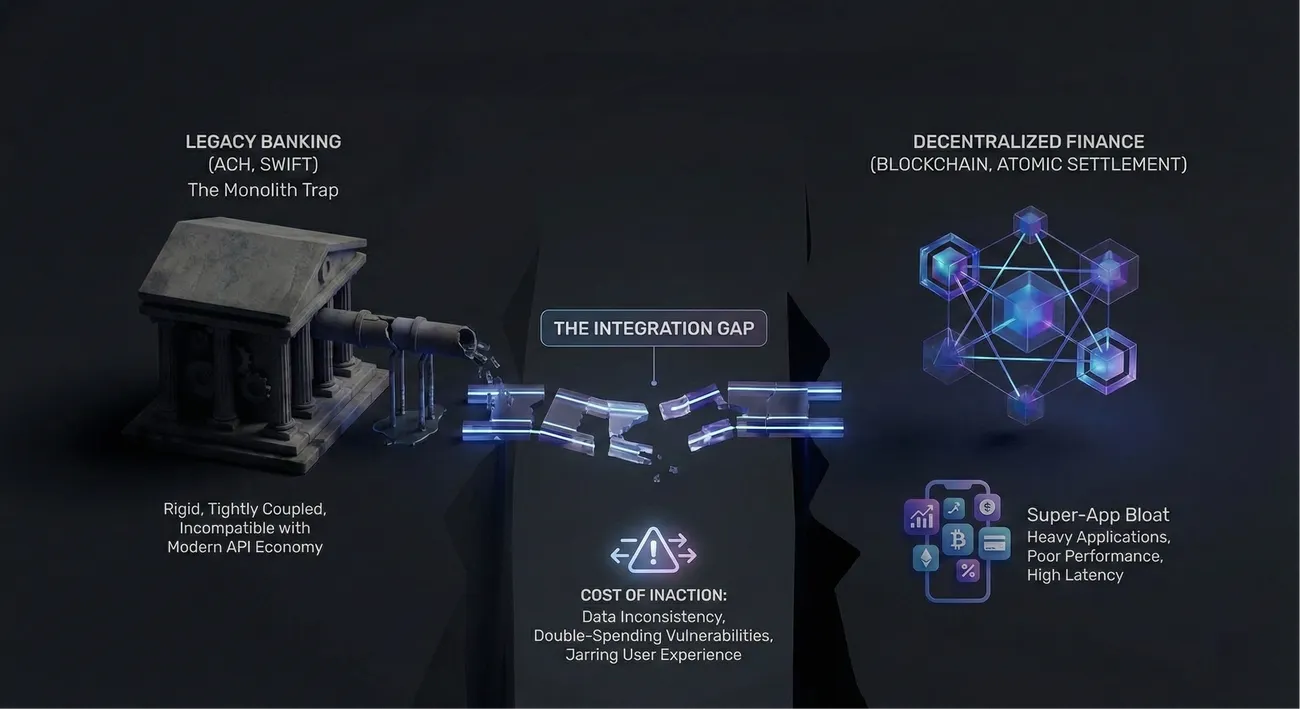

Legacy Monoliths
Traditional architectures were tightly coupled, making them incompatible with the modern API economy and unable to scale specific components independently.
App Bloatware
Attempting to build a "Super-App" often resulted in heavy, sluggish mobile clients. Managing state consistency across asynchronous, distributed systems on the client side led to dropped frames and a lack of trust.
Acme needed a solution that could guarantee strong consistency for internal ledgers while managing the eventual consistency of external blockchains and banking rails, all without sacrificing the "60 frames per second" performance benchmark users expect.
The Solution: A Modular, Event-Driven Architecture
Acme Software engineered Wallet, a modular microservices ecosystem where the backend acts as an intelligent orchestration layer.
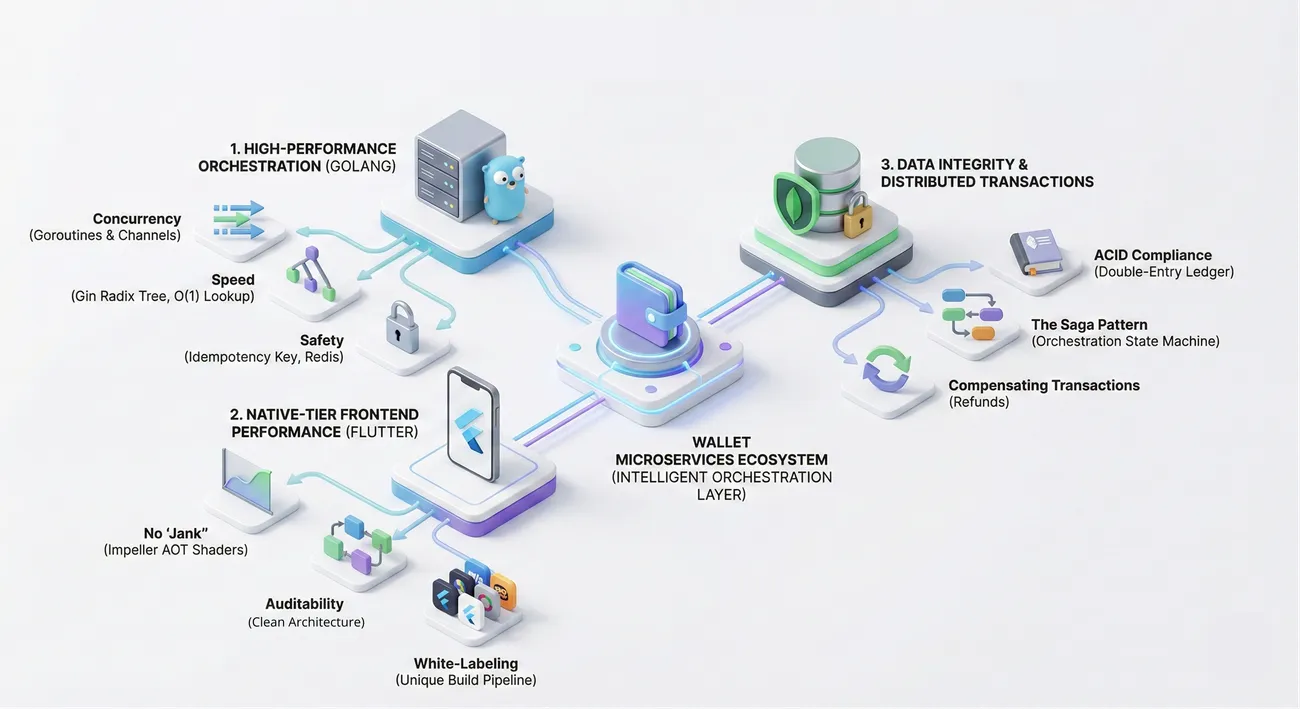
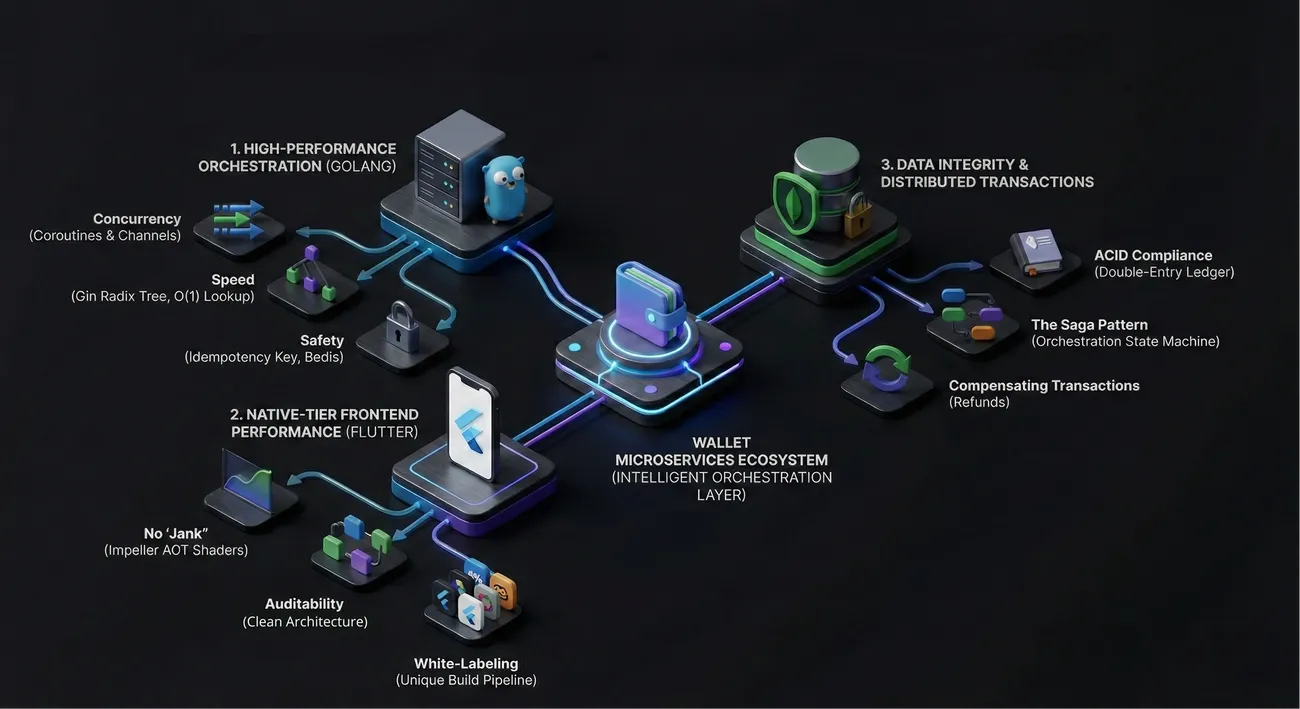
High-Performance Orchestration (Golang)
To handle the heavy lifting, Acme selected Golang over Node.js or Python.

Concurrency
Utilizing goroutines and channels, the system handles parallel API calls (e.g., fetching Fiat and Crypto balances simultaneously) without memory exhaustion.

Speed
The Gin framework utilizes Radix Tree routing for O(1) route lookup complexity, ensuring constant speed regardless of API growth.

Safety
A strict Idempotency Key mechanism (backed by Redis) prevents duplicate transactions during network failures, a critical requirement for financial integrity.
Native-Tier Frontend Performance (Flutter)
To ensure user confidence, the mobile experience had to be flawless.

No "Jank"
By adopting the Impeller rendering engine, Wallet precompiles shaders (AOT), eliminating the runtime stutter common in cross-platform financial charting.

Auditability
The Clean Architecture ensures every state change is deterministic and traceable, essential for debugging financial discrepancies.

White Labeling
A unique build pipeline allows Acme to deploy branded apps for partners by injecting distinct configurations (colors, API keys) into a shared codebase.
Data Integrity & Distributed Transactions

ACID Compliance
Wallet leverages MongoDB’s multi-document transactions to ensure that money is never created or destroyed. A double-entry ledger system provides a perfect audit trail.

The Saga Pattern
To bridge the gap between Fiat (Unit) and Crypto (Tatum), the backend uses an Orchestration-based Saga pattern. This acts as a state machine that manages workflows and executes "Compensating Transactions" (refunds) if a step in the process fails.
Key Results
By moving away from monolithic architecture and embracing a high-concurrency, modular approach, Acme Software achieved best-in-class performance metrics.

10,000 Concurrent Requests/Sec
Optimized connection pooling and goroutines allow the platform to handle massive viral growth spikes without downtime.
<16ms UI Render Time
The implementation of the Impeller engine ensures a consistent 60fps experience, critical for retaining high-net-worth users.
Rapid Time-to-Market
The white-label architecture allows Acme to deliver production-ready, branded MVPs to partners in weeks rather than months.
Global Reach
By abstracting blockchain nodes via Tatum and banking via Unit, the system achieves global functionality without the overhead of physical data centers.
Start Fresh Or Scale Up! Let's Start With Project Discovery.
Whether you are launching a new vision from scratch or need to inject quality into an ongoing project, our team brings the expertise to make it happen. We build solid foundations from the start.