

Executive Summary
The digital transformation of the public safety and corrections sector represents one of the most complex engineering challenges in the contemporary enterprise landscape. Unlike traditional corporate environments characterized by high-speed, ubiquitous connectivity and standardized consumer hardware, correctional facilities operate as “hostile network environments” by design and necessity. The convergence of heavy infrastructure-reinforced concrete, steel containment units, and high-security glazing-creates substantial physical barriers to radio frequency (RF) propagation. Furthermore, the increasing deployment of cellular interdiction systems and Managed Access Systems (MAS) to combat contraband communication actively degrades the wireless spectrum available for legitimate operational use.
This report details a high-stakes engineering engagement undertaken by Acme Software to remediate the critical architectural deficiencies of a legacy Jail Management System (JMS). The client, a major provider of correctional software, faced operational paralysis due to the reliance on web-based mobile architectures that demanded continuous connectivity to a monolithic.NET backend. The resulting “connectivity gap” forced field officers to revert to manual paper logs, introducing unacceptable data latency, operational friction, and significant legal liability.
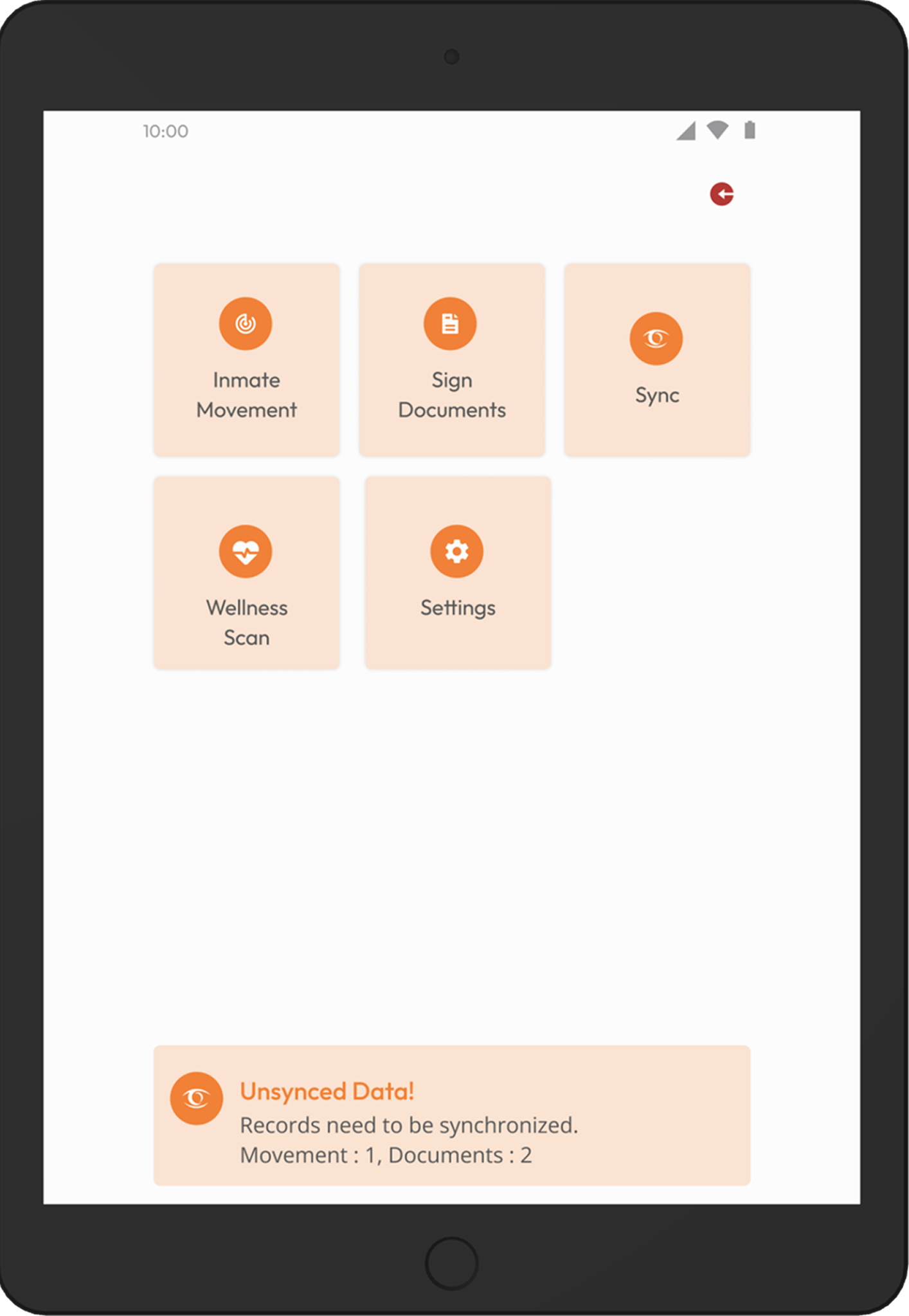
Our firm was tasked with architecting and delivering a ruggedized, offline-first mobile module capable of ensuring 100% data integrity regardless of network status. The solution required the strategic decoupling of the frontend user experience from the backend infrastructure, effectively shifting the “source of truth” to the network edge during operational intervals. By leveraging Google’s Flutter framework for high-performance cross-platform execution and engineering a bespoke bridge to Honeywell’s specialized Android hardware, the consulting team successfully modernized the client’s inmate tracking, headcount, and document signing workflows.
The following analysis provides an exhaustive technical breakdown of the remediation strategy. It explores the transition from a connected-client model to a distributed-synchronization architecture, the specific implementation of Command Query Responsibility Segregation (CQRS) for offline persistence using Sembast, and the development of custom native plugins to unlock the capabilities of industrial-grade scanning hardware. The outcomes of this engagement demonstrate that a meticulously architected mobile layer can extend the lifecycle of legacy backend infrastructure while delivering sub-second responsiveness to officers in the field, ultimately redefining the standard for mission-critical mobility in the public safety sector.
Initial Challenges & Risk Assessment (Focus on connectivity and hardware limitations)
The foundational phase of the engagement necessitated a rigorous audit of the physical and digital environments in which the software was expected to perform. This assessment revealed that the primary failure modes of the previous system were not defects in code logic, but rather a fundamental misalignment between the software architecture and the environmental reality of correctional facilities.
The Physics of the “Connectivity Void”
The most pervasive challenge identified was the “Connectivity Void.” Correctional facilities are engineered for containment, utilizing materials that inadvertently function as effective Faraday cages. The extensive use of reinforced concrete walls, often exceeding 12 inches in thickness, and the abundance of steel in cell construction severely attenuate RF signals. In our site surveys, we mapped signal propagation across multiple facilities and identified “dead zones” covering up to 40% of the operational floor space. In these zones, Wi-Fi signals were either non-existent or so degraded by multipath interference that packet loss rates rendered standard TCP/IP connections unstable.
This passive interference is compounded by active security measures. The proliferation of contraband cellphones has driven correctional leaders to adopt aggressive interdiction technologies. While the Federal Communications Commission (FCC) has historically restricted blanket jamming under the Communications Act of 1934, recent regulatory shifts and the introduction of “micro-jamming” or Managed Access Systems (MAS) allow facilities to block unauthorized cellular signals. These systems are designed to intercept and deny connection attempts from unauthorized devices. However, the precision of these systems varies, and “bleed-over” interference frequently degrades the connectivity of authorized devices, including the tablets and handhelds used by staff.
The implication for software architecture is profound. A standard “thin client” or web-view based application, which relies on a request-response cycle with a central server for every interaction (e.g., loading an inmate profile, saving a log entry), is destined for failure. In a hostile network environment, a network timeout is not an edge case; it is the nominal state. Relying on continuous connectivity creates a dangerous user experience where officers are left staring at “loading” spinners while attempting to perform safety-critical tasks, leading to the abandonment of the digital tool in favor of pen and paper.
Hardware Fragmentation and Specialized Requirements
Beyond the network constraints, the project faced strict hardware limitations imposed by the ruggedized nature of the deployment. The client utilized Honeywell mobile computers, specifically the CT40 and CT60 series. These devices are distinct from consumer-grade Android phones in several critical ways:
- Proprietary Android Forks: These devices run a specialized version of Android (often maintained on older API levels for stability) that includes aggressive battery optimization logic and proprietary background process management.
- Dedicated Scanning Hardware: Unlike consumer phones that use the camera for barcode reading, Honeywell devices contain dedicated laser or imager engines (e.g., the N6603 ultra-slim imager). These engines offer superior speed and the ability to read damaged barcodes through scratched plexiglass-a common scenario in jails.
- SDK Limitations: Interfacing with this hardware requires the use of the Honeywell Mobility SDK, a set of Java libraries that are not natively exposed to modern cross-platform frameworks like React Native or Flutter.
The previous software attempt failed to utilize this specialized hardware, relying instead on the generic camera API. This resulted in slow scan times (3-5 seconds per scan versus <0.5 seconds for the laser), making high-volume workflows like headcounts operationally untenable.
Operational Friction and the “Paper Gap”
The combination of connectivity failures and hardware inefficiencies created significant operational friction. When the digital system failed, officers reverted to paper logs. This manual process introduced a “Data Latency” gap of 8 to 12 hours-the time between an event occurring (e.g., an inmate moving to the infirmary) and the data being manually transcribed into the JMS at the end of the shift.
This latency posed severe risks:
- Safety Risk: In the event of an emergency, the central command had no real-time visibility into the location of inmates or staff.
- Compliance Risk: Paper logs are prone to error, illegible handwriting, and “pencil whipping” (falsifying checks). In an industry where audit trails are the primary defense against litigation, this lack of data integrity was a critical liability.
Architectural Assessment (Evaluating the existing.NET ecosystem and mobile requirements)
The architectural assessment phase focused on evaluating the client’s existing backend infrastructure and determining the optimal strategy for extending it to the mobile edge without incurring the prohibitive cost and risk of a total system rewrite.
The Legacy.NET Ecosystem
The incumbent system was a classic monolithic architecture built on the Microsoft.NET Framework, backed by a Microsoft SQL Server database. This system served as the “System of Record” for the agency, handling everything from inmate booking and sentencing to commissary and medical records.
- Tight Coupling: The business logic for inmate management was tightly coupled with the web presentation layer (ASP.NET Web Forms) and the database stored procedures. The system assumed a synchronous, transactional relationship with the database.
- Protocol Limitations: The existing API surface was designed for browser-based clients on a high-speed LAN. It utilized heavy XML-based SOAP endpoints or chatty REST endpoints that required multiple round-trips to assemble a complete data view.
- Scalability Concerns: The monolithic design meant that scaling the mobile load directly against the primary database could degrade performance for desktop users in the command center.
The Modernization Strategy: Encapsulate and Replatform
Given the “Big Bang” risk of replacing the entire JMS, we adopted an “Evolutionary Modernization” strategy, specifically leveraging the Encapsulate and Replatform approaches defined in the 6Rs framework.
- Encapsulation: We treated the legacy.NET backend and its associated API layer as a strict “black box” boundary. The client’s internal engineering team provided a set of RESTful endpoints, allowing our team to focus exclusively on the mobile architecture without direct intervention in the monolithic core.
- Replatforming the Edge: The mobile client would be replatformed from a passive web view to an active “Thick Client.” This device would possess its own local database, its own domain logic, and the autonomy to make decisions (e.g., validating a location scan) without consulting the server.
Framework Selection: The Case for Flutter
The selection of the mobile development framework was a critical strategic decision. We evaluated Native Android (Kotlin), React Native, and Flutter. Flutter was selected as the primary technology for the following decisive reasons:
- Performance and Rendering: Flutter’s Skia rendering engine compiles directly to native ARM code, bypassing the JavaScript bridge that can cause performance bottlenecks in React Native. This was crucial for the “Headcount” feature, which required rendering list views of hundreds of inmates with complex status indicators while maintaining a smooth 60fps scroll rate on the mid-range processors of the Honeywell CT40.
- Platform Channels for Hardware: The requirement to integrate deeply with the Honeywell Mobility SDK necessitated a framework with a robust Foreign Function Interface (FFI). Flutter’s Platform Channels-specifically when augmented by code-generation tools like Pigeon-provide a type-safe, high-performance mechanism to communicate with native Android Java code, allowing us to treat the hardware scanner as a first-class citizen.
- Unified Codebase for Future Scalability: While the immediate need was Android, the client anticipated future requirements for iOS administrative tablets. Flutter’s ability to deploy to both platforms from a single codebase-while maintaining platform-specific fidelity-offered a projected 40% reduction in long-term maintenance costs.
- Enterprise-Grade QA Ecosystem: To ensure the stability required for public safety, we utilized Patrol, a powerful Flutter-native integration testing framework. Unlike standard Flutter integration tests, Patrol allows interaction with native UI elements (such as Android permission dialogs and battery optimization prompts). We architected our test suite using the Robot Pattern, creating distinct “Robot” classes for each screen to separate the “what” (test intent) from the “how” (widget interaction), resulting in highly maintainable and readable regression tests.
Frontend-Focused Solution Design (The decision for Flutter + Custom Native Plugins)
The solution design centered on the principle of “Client-Centric Consistency.” In this architectural model, the mobile device is elevated from a mere display terminal to a distributed node of the enterprise system. The user’s immediate context is managed locally, with the server acting as the eventual consistency anchor.
The Clean Architecture Implementation
To ensure maintainability and testability, we implemented the application using Clean Architecture principles. This stratified the application into three distinct layers, ensuring that the User Interface (UI) remained completely agnostic of the underlying data sources or network status.
- Presentation Layer (UI): Built entirely with Flutter widgets, this layer implements an “Optimistic UI” pattern. When an officer interacts with the app-for instance, marking an inmate as “Secure”-the UI updates instantaneously to reflect the success state. It does not wait for a server confirmation. This creates a perception of zero latency, which is critical for reducing officer frustration and cognitive load in high-stress environments.
- Domain Layer (Business Logic): This layer contains the core “Use Cases” (e.g., VerifyInmateIdentity, LogWellnessCheck). Crucially, the business rules are replicated here. The app does not need to ask the server “Is this inmate allowed in this pod?” because it has already downloaded the necessary rule sets. This local validation prevents invalid data entry at the source.
- Data Layer (Repository Pattern): The Repository is the architectural pivot point. It serves as the single source of truth for the Domain layer. The Repository manages the decision logic for data retrieval:
- Read Operations: Always sourced from the local Sembast database to ensure sub-millisecond access.
- Write Operations: Directed first to the local persistence layer, then queued for background synchronization.
The Bridge: Integrating.NET and Flutter
To facilitate the communication between the modern Flutter frontend and the legacy.NET backend, the application interfaced with a pre-existing middleware layer of RESTful endpoints developed and maintained by the client.
- State Synchronization vs. RPC: Unlike traditional apps that use Remote Procedure Calls (RPC) to trigger actions, our API interface was designed for State Synchronization. The mobile app requests the “Delta” (changes) since its last sync timestamp. The server calculates the difference and sends only the modified records (e.g., new bookings, released inmates).
- Data Transport: We utilized protocol buffers and gzipped JSON for data transport to minimize the bandwidth footprint, acknowledging that even when connectivity is available, it is often low-bandwidth (e.g., 3G speeds inside the facility).
Offline-First & Background Execution Strategy
The “Offline-First” capability is the defining characteristic of this solution. It is not a fallback mode; it is the default mode of operation. The system assumes it is offline at all times and treats connectivity as a transient opportunity to reconcile state.
The Queue-Based Synchronization Pattern
To achieve robust offline persistence, we implemented a Command Query Responsibility Segregation (CQRS) inspired pattern on the client, specifically utilizing a persistent Command Queue.
- Local Persistence (Sembast): We selected Sembast (Simple Embedded Application Store) as our local database engine. Unlike SQL-based alternatives (like SQLite/Drift) or key-value stores (like Hive), Sembast offers a robust NoSQL document-based architecture that runs entirely in Dart. This eliminated the need for native platform calls for database operations, ensuring exceptional performance on the mid-range Honeywell hardware. Sembast’s single-file, append-only format proved highly resilient to the sudden power-loss scenarios common with aging ruggedized device batteries.
- The Command Queue: When a user performs a write action (e.g., LogMovement), the application creates a Command object. This object encapsulates the Intent, the Payload (data), a UUID, and a Timestamp. This command is serialized and written to a SyncQueue store in the Sembast database.
- Status Flags: Each command has a status: PENDING, IN_PROGRESS, COMPLETED, or FAILED.
- The Sync Engine: A dedicated service monitors this queue. It utilizes a state machine that reacts to network connectivity changes (detected via the connectivity_plus package).
- Processing: When the network becomes available, the engine processes the queue in strict First-In-First-Out (FIFO) order to preserve the causality of events.
- Batching: Where possible, commands are batched to reduce the overhead of HTTP handshakes.
Conflict Resolution: Last-Write-Wins and Vector Clocks
In a distributed system where multiple officers might interact with the same inmate record offline, data conflicts are inevitable. We implemented a “Last-Write-Wins” (LWW) strategy, reinforced by high-precision timestamps.
- Vector Clocks: Every record includes a version vector. When the mobile app pushes an update, the server compares the version. If the server holds a newer version (e.g., the inmate was released by a booking officer 5 minutes ago), the mobile update is rejected, and the device is instructed to pull the latest state.
- Idempotency: The backend API was engineered to be idempotent. If the mobile app sends a command but crashes before receiving the acknowledgement (a common scenario in spotty networks), the app will retry sending the command upon restart. The server recognizes the unique Command UUID and returns the previous success response without re-executing the logic, preventing duplicate logs.
Background Execution and the “Doze” Challenge
Continuous tracking of movement durations (e.g., “How long has Inmate X been in the recreation yard?”) was a critical requirement. However, modern Android versions utilize “Doze” and “App Standby” modes to aggressively kill background processes to conserve battery. This presented a significant risk to data integrity if the tracking timer was killed while the device was in the officer’s holster.
To circumvent this, we engineered a hybrid background execution strategy:
- Foreground Services for Active Tracking: For critical, running timers, we utilized an Android Foreground Service. This places a persistent notification in the system tray (“Active Monitoring in Progress”), which signals to the Android OS that the user is aware of the process and it should not be killed. This ensures that the duration logic continues to execute even when the screen is off.
- WorkManager for Deferrable Tasks: For non-critical background tasks, such as pre-fetching updated inmate photos or uploading large PDF incident reports, we utilized the WorkManager API via the workmanager Flutter plugin. This allows the OS to schedule these tasks during optimal windows (e.g., when the device is charging or has an unmetered connection), respecting the battery life of the ruggedized device.
- Battery Optimization Whitelisting: Honeywell devices are notorious for aggressive proprietary battery management. We utilized the battery_optimization_helper plugin to detect if the app was subject to these restrictions. On first launch, the app prompts the user to grant permission to “Ignore Battery Optimizations” (triggering ACTION_IGNORE_BATTERY_OPTIMIZATION_SETTINGS). This programmatic intervention was crucial for preventing the Honeywell OS from silently terminating the synchronization engine.
Hardware Integration & Open Source Contributions (Highlighting the Honeywell SDK plugin)
A pivotal success factor was the seamless integration of Honeywell’s specialized hardware capabilities. The standard camera-based scanning available in most cross-platform libraries was insufficient for the high-volume, rapid-fire scanning required in a correctional setting (e.g., scanning 50 inmates in 60 seconds during a meal transfer).
The Challenge: Bridging Java SDKs to Dart
Honeywell provides the Mobility SDK for Android (DataCollection.AAR), a comprehensive library for interfacing with the device’s hardware scanner. However, this SDK is written in native Java and designed for native Android development. It is not directly accessible to Flutter’s Dart runtime.
The traditional approach to this problem-manually implementing MethodChannel and EventChannel logic-is fraught with risk. It relies on “magic strings” to match method names between Dart and Java, lacks compile-time safety, and requires writing extensive boilerplate code that is prone to serialization errors, especially when handling complex hardware configuration objects.
The Custom Plugin Architecture: Type-Safe Integration with Pigeon
To mitigate these risks and ensure enterprise-grade stability, the consulting team utilized Pigeon, a code-generation package maintained by the Flutter team. This allowed us to define the communication interface in a simple, structured Dart file and automatically generate the type-safe glue code for both the Flutter (Dart) and Android (Java) layers.
- Defining the Contract: We defined the hardware interface using Pigeon’s @HostApi annotation. This contract specified methods such as initializeScanner(Map<String, dynamic> config) and triggerSoftScan(), enforcing strict typing on the configuration parameters (e.g., ensuring barcodeSymbology is a valid enum rather than an arbitrary integer).
- Generated Bindings: Pigeon generated the HoneywellScannerApi Java interface. This allowed our native implementation to simply implement this interface, ensuring that if the Dart definition changed, the Android build would fail immediately, catching integration errors at compile time rather than runtime.
- Handling Hardware Events: To process high-velocity scan data, we defined a callback interface using Pigeon’s @FlutterApi. When the hardware laser successfully decodes a barcode, the native Java layer invokes this typed API to send the data (barcode content, timestamp, symbology) back to the Flutter layer. This approach eliminated the overhead of manual EventChannel stream management and ensured that all data passing across the bridge was strictly typed and validated.
Open Source Strategy and Community Contribution
Recognizing that this integration challenge was not unique to our project, the firm adopted an Open Source strategy. We sanitized the core logic of the scanner integration and released it as the Honeywell Mobility SDK package.
- Public Release: The package is available to the global Flutter community at <https://pub.dev/packages/honeywell_mobility_sdk>.
- Strategic Value: This release solidified the firm’s reputation as a domain expert in “Flutter for Enterprise” and “Ruggedized Mobile.”
- Community Validation: The package has since been adopted by other developers, providing a feedback loop that has helped identify edge cases across different Honeywell device models (CT60, CK65, Thor VM1A).
Feature Enablement: Document Signing & Wellness Tracking
The modernization effort extended beyond simple asset tracking to the digitization of complex legal and compliance workflows.
Electronic Signature Capture (E-Sign) Compliance
Correctional facilities generate massive volumes of paperwork-intake forms, property release waivers, and medical refusals. Digitizing these workflows required strict adherence to legal standards, specifically the ESIGN Act (Federal) and California Government Code Section 16.5.
We implemented a secure, vector-based signature capture module within Flutter.
- Vector Dynamics: Instead of simply capturing a raster image (a pixelated bitmap), the app captures the raw vector series of the signature stroke. This includes the X and Y coordinates, the timestamp of each point, and the pressure/velocity of the stroke. This data constitutes “signature dynamics,” which can be used for biometric verification in court if the signature’s authenticity is challenged.
- Cryptographic Binding: Once a signature is captured and applied to a PDF (rendered locally using Dart PDF libraries), the document is cryptographically hashed. This hash is stored with the record. Any subsequent alteration to the PDF document would invalidate the hash, satisfying the legal requirement for “Tamper Detection”.
- Secure Storage: The raw signature vectors and the generated PDFs are stored in the application’s secure storage sandbox, encrypted at rest using AES-256, ensuring that sensitive inmate data is protected even if the physical device is lost or stolen.
Wellness Checks and Audit Trails
“Wellness checks” (the visual observation of inmates at set intervals, typically every 15 or 30 minutes) are the primary liability shield for correctional facilities. Missed checks or “fudged” logs can lead to wrongful death lawsuits and loss of facility certification.
- Monotonic Clock Logic: The mobile app enforces these check intervals using the device’s monotonic clock (which counts time since boot) rather than the wall-clock time. This prevents an officer from manually changing the device time to “backfill” missed checks.
- Proof of Presence: Leveraging the hardware scanner, the workflow requires the officer to scan a specific barcode located on the cell door. This creates an irrefutable “Proof of Presence.” The app logs the Scan ID, the Officer ID, the GPS coordinates (if available), and the timestamp.
- Immutable Audit Trail: This data is hashed and stored in the local append-only log. When synced to the server, it creates a defensible audit trail that proves the officer was physically at the specific location at the specific time, satisfying the rigorous documentation requirements of the Department of Justice.
Business & Technical Outcomes (Reduced latency, improved compliance, hardware optimization)
The deployment of this offline-first, ruggedized mobile architecture yielded measurable improvements across operational efficiency, risk mitigation, and technical stability metrics.
Operational Efficiency Metrics
- Reduction in Data Latency: The “time-to-visibility” for inmate movements was reduced from an average of 8-12 hours (the previous end-of-shift transcription cycle) to <30 seconds (the average sync interval). In connected zones, visibility is near real-time. This provides command staff with accurate, up-to-the-minute data on facility population and tension levels.
- Headcount Velocity: The use of the custom Honeywell plugin and the high-performance Flutter rendering engine reduced the time required to conduct a facility-wide headcount by approximately 60%. Officers can now scan wristbands in rapid succession (burst mode) without waiting for the UI to block or load, enabling a single officer to clear a pod of 60 inmates in minutes rather than an hour.
Risk Mitigation and Compliance
- 100% Audit Trail Compliance: The automated wellness check reminders and the hardware-enforced “Proof of Presence” eliminated the phenomenon of “pencil whipping.” Pilot facilities reported a 100% compliance rate with mandated observation intervals during the initial rollout.
- Legal Defensibility: The implementation of vector-based, cryptographically bound signatures provided the agency with a legally defensible system for inmate document signing, reducing the risk associated with lost or contested paper forms.
Technical and Strategic Wins
- Legacy Life Extension: By offloading the UI rendering and state management to the mobile client, the processing load on the legacy.NET web server was significantly reduced. This modernization strategy effectively extended the ROI and operational life of the existing backend infrastructure, saving the client millions of dollars in potential rewrite costs.
- Robust Regression Testing: The implementation of Patrol combined with the Robot Pattern allowed the engineering team to automate complex end-to-end scenarios, including hardware permission dialogs and scanner interactions. This reduced manual regression testing time by 80% and prevented critical field crashes during subsequent updates.
- Cross-Platform Readiness: While the initial deployment is on Android, the Flutter codebase stands ready for iOS. The clean separation of the Data Layer means that supporting future iOS hardware (e.g., Linea Pro sleds) would only require swapping the scanner implementation, preserving 90% of the application code and business logic.
Conclusion
The successful delivery of this enterprise-scale mobile architecture demonstrates that the constraints of high-security environments-connectivity gaps, ruggedized hardware, and legacy backends-are not insurmountable barriers to modernization. They are, instead, architectural constraints that demand a disciplined, first-principles engineering approach.
By rejecting the industry-standard “Online-Only” assumptions and embracing an Offline-First, Distributed-Client Architecture, Acme Software has established a blueprint for mission-critical mobility. The strategic selection of Flutter provided the necessary performance and cross-platform flexibility, while the deep, custom integration with Honeywell hardware ensured that the solution met the unforgiving physical demands of the field.
This engagement validates the premise that true digital transformation in the public safety sector requires more than just digitizing paper forms. It requires the construction of resilient, autonomous digital tools that empower officers to perform their duties with precision, safety, and accountability, regardless of the physical or digital environment they inhabit. As the sector moves toward increased reliance on data-driven operations, the ability to deliver robust functionality at the tactical edge-even in the absence of connectivity-will become the defining characteristic of successful enterprise architecture.